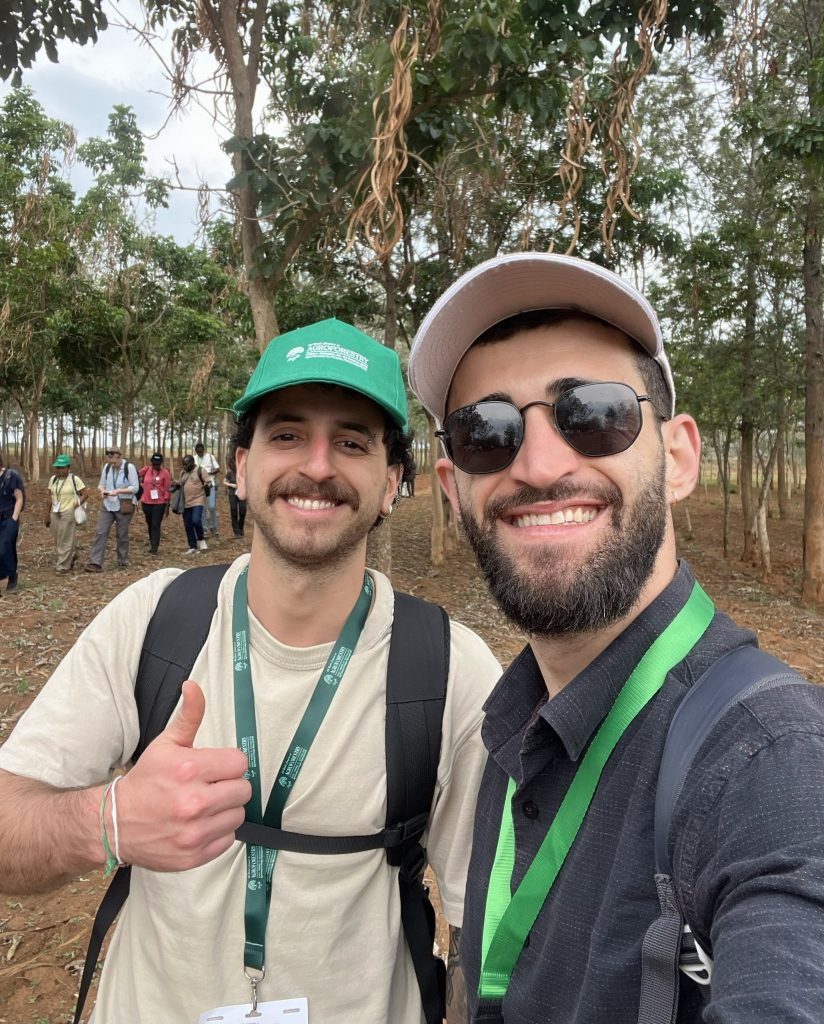
EcoSiPas Researchers @ Tropentag 2026
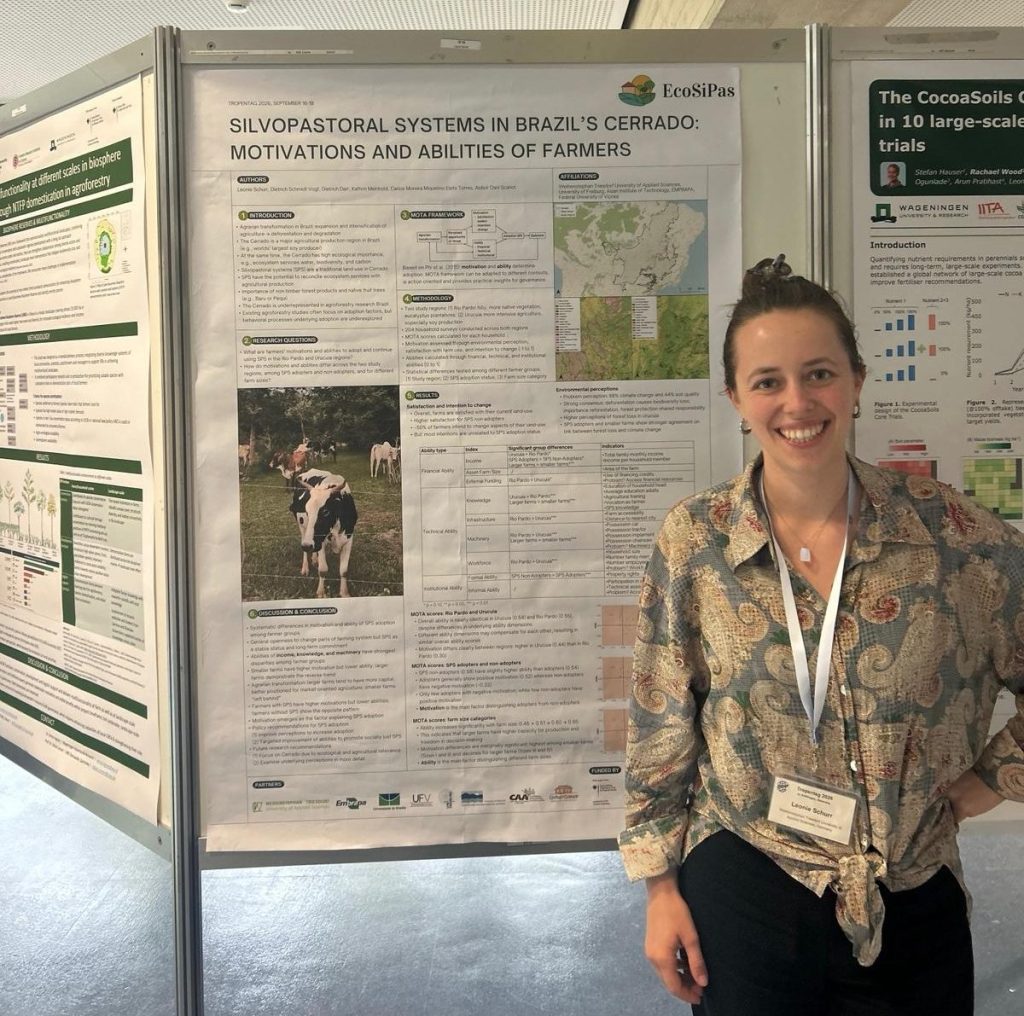
The EcoSiPaS team was represented at Tropentag 2026, held from 16 to 18 September in Göttingen, Germany, under the theme “Towards Multi-functional Agro-Ecosystems Promoting Climate-Resilient Futures.” Leonie Schurr presented a poster sharing findings from ongoing research in the Brazilian Cerrado, contributing to discussions with the international scientific community and governmental actors on sustainable agricultural development.

The study examined the factors influencing farmers’ motivation and ability to adopt silvopastoral systems (SPS), drawing on data from 204 farming households in the rural regions of Rio Pardo and Urucuia. Using the Motivation and Ability (MOTA) framework, the research revealed that farm size is a major determinant of farmers’ ability to implement SPS, with smallholders facing greater constraints in income, knowledge and access to machinery. Regional differences were also identified, while motivation emerged as the key factor distinguishing SPS adopters from non-adopters.

These findings highlight that promoting SPS requires more than technical training and improved access to resources. Understanding farmers’ perceptions and motivations, while addressing structural inequalities that constrain their ability to adopt sustainable practices, is essential for developing socially inclusive strategies. The presentation contributed to the broader exchange on multifunctional agroecosystems and pathways towards more sustainable and climate-resilient agricultural landscapes in the Cerrado.

EcoSiPas Researchers @ 6th World Congress on Agroforestry

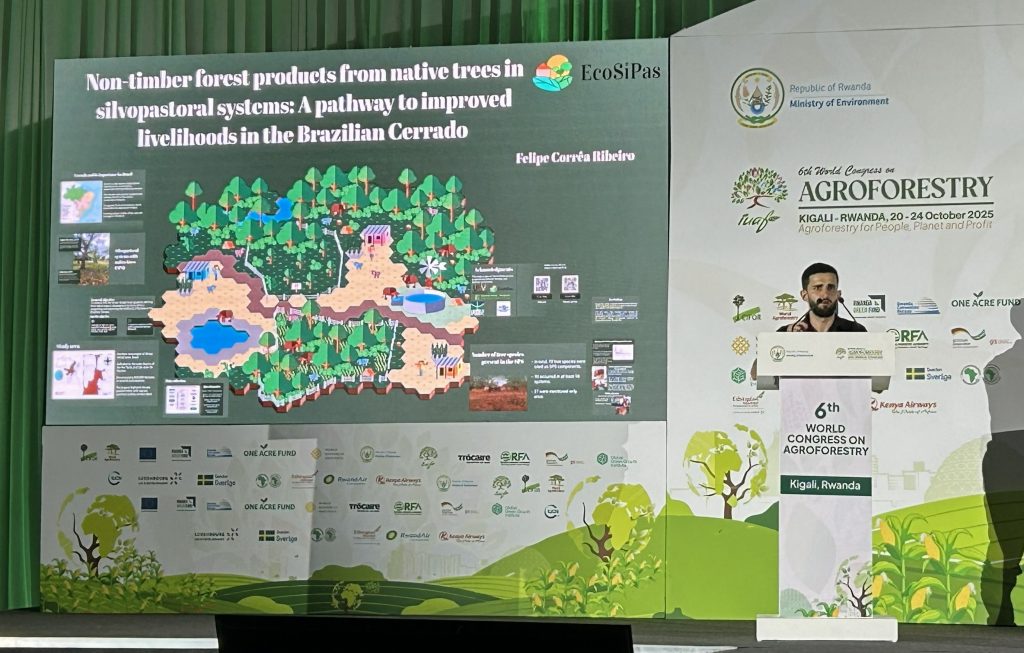
The EcoSiPas team was strongly represented at the 6th World Congress on Agroforestry which took place from the 20th to 24th of October in Kigali, Ruanda. With in total three oral presentations we could share our results from the ongoing research activities in the Brazilian Cerrado, with the scientific community.

Two presentations focused on the use and potential of non-timber forest products (NTFPs) in the Cerrado. Felipe Ribeiro demonstrated that numerous native tree species exist in the region from which a vast number of NTFPs are collected. Over half of the farm households interviewed collect NTFPs, yet only about 1/3 were sold, highlighting their importance for household consumption while commercialization potential to increase income is not fully exploited yet. The presentation by Katie Meinhold (presented by Dietrich Darr), focused on two specific NTFPs, Baru (Dipteryx alata) and Pequi (Caryocar Brasiliense). Commercial value chains of both these species remain predominantly informal, although Baru typically reaches high-value, (inter)national markets, whereas Pequi is more commercialized locally, within the Cerrado. A variety of barriers need to be overcome to enhance benefits for extractivists, as integrating labour costs often make this activity unprofitable.  

The presentation by Lucas Kerkoff highlighted where priority areas for silvopastoral systems (SPS) adoption can lie, based on a broad set of biophysical parameters taken into consideration. About 20% of the land shows potential for including SPS as a sustainable land-sharing mechanism, through which ecosystem service provision within productive landscapes can be enhanced.